
Dusty Lockwood’s App State journey began with a defining realization: “The mind is a unique thing, and when faced with life‑changing challenges, I learned that, for me, the best medicine was to simply never stop moving forward.” As a teenager suddenly responsible for supporting themself, Dusty faced the kind of obstacles that force a person to decide what truly matters. For Dusty, the answer was clear - an education. It was the one thing they wanted badly enough to fight for.
That commitment became their anchor. Dusty learned that resilience isn’t about ignoring emotions or pretending hardship doesn’t hurt. “You are allowed to feel, to cry, and to seek comfort and support from others,” Dusty notes. “The important thing is to continue working toward what matters to you.” Pursuing their goals became a form of therapy- structure in the midst of uncertainty, discipline in the face of instability, and a growing sense of control when so much felt out of their hands.
Those years built a confidence Dusty still carries today. “I can still be scared of new challenges,” Dusty reflects, “but fear no longer stops me from pursuing them.” They trust their ability to learn, adapt, and find a way forward. And they discovered the power of speaking up, advocating for their ideas, even when they worried about being doubted because of their age or experience. “My experiences taught me that I am capable, that my perspective has value, and that I deserve to be heard.”
One of the most pivotal moments of Dusty’s undergraduate years came when their classmates elected them Project Manager for the first-ever M+F EXPO. At the time, Dusty didn’t understand why. “I had never really viewed myself as a leader,” they admit, despite having served in leadership roles before.
But as she organized the EXPO—bringing people together, creating structure, keeping momentum, supporting her peers—she realized exactly why her classmates chose her. “I discovered that I thrive in bringing people together, keeping projects moving forward, and helping others succeed.” Leadership wasn’t something she lacked; it was something she had never fully claimed.
The experience reshaped her self-perception. “That experience fundamentally changed how I viewed myself,” she says. It revealed strengths she hadn’t recognized: determination, organization, drive, and a genuine love for helping others succeed. It also planted a seed for her future career. “I know that it is a role I aspire to grow into,” she says of leadership today. Her classmates saw that potential before she did, and she carries that confidence with her now.
App State’s Interior Design program prepared Dusty not just to design, but to think. Studio culture taught her how to collaborate, accept critique, juggle deadlines, and refine ideas—skills she now uses daily in product development. “The studio culture taught me how to collaborate with others, accept constructive criticism, manage multiple deadlines, and continually refine my work.”
Faculty mentors pushed her to understand the “why” behind every decision. “Good design is not just about creating something beautiful—it is about solving problems, meeting the needs of others, and balancing creativity with real-world constraints.” That mindset became the foundation of her career in the commercial textile industry, where every product must meet performance, sustainability, budget, and aesthetic goals.
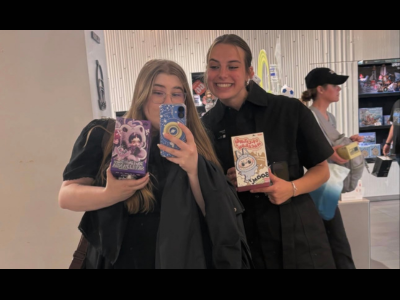
Hands-on experiences were the final piece. “By the time I graduated, I was already comfortable receiving feedback, presenting my ideas, and working through complex design challenges with a team.” App State didn’t just teach her how to design; it taught her how to communicate, collaborate, and grow.
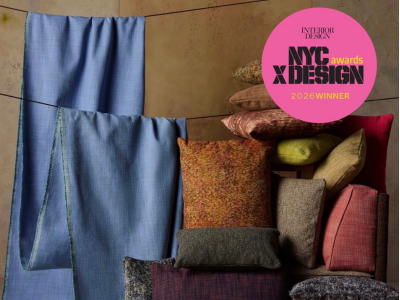
Now, as Product Marketing Manager at HBF Textiles, Dusty returns to the M+F EXPO not as a student organizer, but as an exhibitor. It’s a moment that feels both surreal and deeply meaningful.
“I never imagined that just a few years later, I would be standing on the other side of the booth representing a company and products of my own.” She remembers hoping the event would help her classmates connect with industry professionals. Today, she stands in that very role—representing a company she loves, showcasing products she helped bring to life, and speaking with students who are exactly where she once stood.
It’s also a reminder of how far she’s come. From navigating personal challenges to discovering her leadership potential to stepping confidently into the commercial textile industry, Dusty’s journey reflects growth, resilience, and purpose. She carries with her the mentorship of leaders like Mary Jo Miller, HBF’s former VP + Creative Director, who hired her, believed in her, and helped shape her early career.
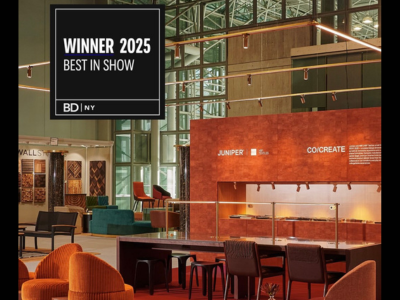
Returning to the EXPO is more than a milestone; it’s a testament to the goals she fought for—and achieved. “It is a tangible reminder that the goals I worked so hard toward as an undergraduate became reality.”
For students facing personal or financial obstacles, Dusty’s guidance is rooted in lived experience. She encourages them not to be afraid to ask for help, even when it feels uncomfortable or vulnerable. “You do not have to carry those burdens alone,” she says. Faculty at App State genuinely care, and building relationships with mentors can become one of the most valuable parts of a student’s career. She also urges students to prioritize their mental health, reminding them that recognizing when you need support is a sign of strength, not weakness. Most importantly, she wants students to believe in their future. “Your current circumstances do not define your future,” she says. Progress may be slow or uneven, but every challenge builds resilience—and that resilience becomes one of your greatest strengths. Dusty’s own journey is proof that persistence, support, and self-belief can change everything.
About the Department of Applied Design
One of seven departments housed in the College of Fine and Applied Arts, the Department of Applied Design at Appalachian State University fosters excellence in design education, design research, and professional placement. The department balances theoretical and pragmatic approaches while exploring an awareness of impact through design decisions on the global community. Faculty focus on a holistic approach to creative problem-solving by integrating sustainability and ethical responsibility in teaching and practice. The department offers bachelor's degrees in apparel design and merchandising, industrial design, and interior design.
About the College of Fine and Applied Arts
Appalachian State University's College of Fine and Applied Arts is a dynamic and innovative group of seven academic departments, bringing together a variety of perspectives, experiences, and real-world education to provide unique opportunities for student success. The college has more than 3,500 undergraduate and graduate majors. Its departments are Applied Design, Art, Communication, Military Science and Leadership, Sustainable Development, Sustainable Technology and the Built Environment, and Theatre and Dance.
About Appalachian State University
As the premier public undergraduate institution in the Southeast, Appalachian State University prepares students to lead purposeful lives as global citizens who understand and engage their responsibilities in creating a sustainable future for all. The Appalachian Experience promotes a spirit of inclusion that brings people together in inspiring ways to acquire and create knowledge, to grow holistically, to act with passion and determination, and to embrace diversity and difference. Located in the Blue Ridge Mountains, Appalachian is one of 17 campuses in the University of North Carolina System. Appalachian enrolls nearly 21,000 students, has a low student-to-faculty ratio, and offers more than 150 undergraduate and graduate majors.

Dusty Lockwood story 2026

Dusty Lockwood story 2026