
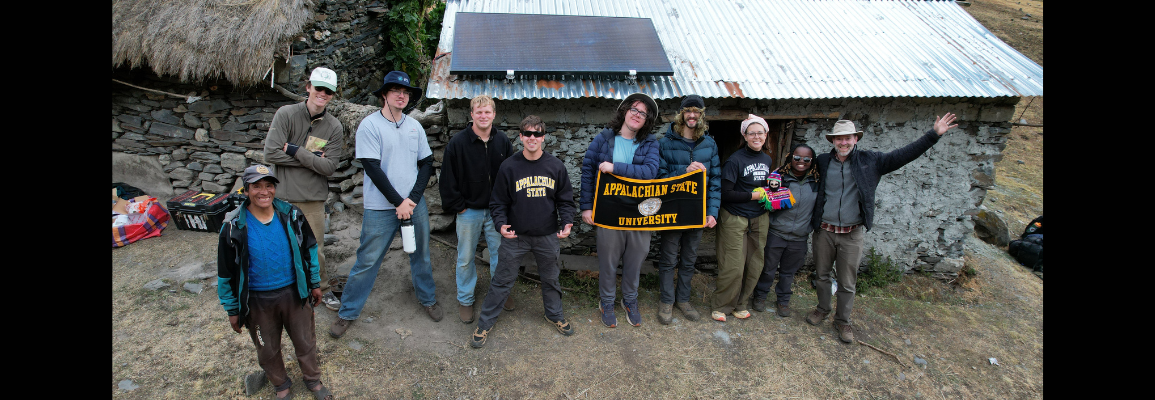
In July 2026, a team of students and faculty from Appalachian State University’s Department of Sustainable Technology and the Built Environment traveled to the high-altitude Cusco region of Peru. Partnering with the Canadian NGO Light Up the World (LUTW), the group set out to address energy poverty by installing off-grid solar systems, battery storage, and satellite internet across three rural Quechua-speaking communities, including Ancallachi, Rosaspata, and Quinsapujio.
What unfolded over the next week was far more than a technical service-learning project. It became a profound lesson in human resilience, global inequity, and the transformative power of community.
At nearly 3,900 meters above sea level, oxygen levels drop to about 60% of those at sea level. Even simple movement becomes a challenge. Students quickly learned that the physical environment was not just part of both the individual, but the professional journey.
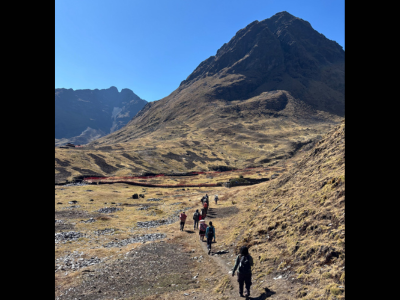
Student Jenna Carlile recalled the first day’s hike to a home installation site as both “beautiful and grueling.” Reaching the top ahead of the group, she was greeted warmly by the homeowners before collapsing into a breathless rest. Sitting atop the hill, looking down the valley, she felt “small and humble,” struck by the realization that the people who lived there climbed that hill every day as part of their livelihood. That moment reframed her understanding of sustainability.
“We try to push for sustainable living in the U.S., but having that goal is a privilege in itself,” Jenna reflected. “Here, sustainable living isn’t a choice - it’s a necessity shaped by circumstance.”
Reflecting on the motivation behind the trip, faculty leader Dr. Jeremy Ferrell explained, “Peru is incredibly rich in culture, landscape, and indigenous knowledge. It’s an inspiring place, perfect for broadening perspectives. I wanted to expand the service-learning component so students could directly engage with the challenges of energy poverty and the ways of life in developing communities.”
The project became a living classroom where technical skills, cultural humility, and human connection intertwined. For many students, the most powerful learning came not from the installations themselves, but from witnessing the interconnectedness of the Quechua communities.
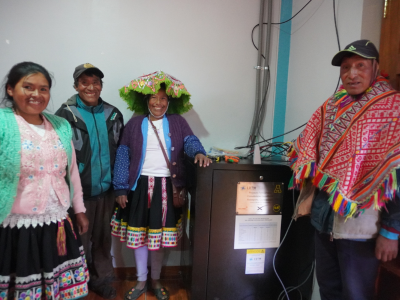
Student Sawyer Houston described Ancallachi as a place where people rely on one another “365 days a year for everything, from growing crops and educating children to taking care of each other.” Despite lacking many comforts common in the U.S., the community radiated joy, generosity, and resilience. “These people live fulfilling lives without many of the comforts we take for granted. They keep smiles on their faces and continue on despite the inequities they endure.”
During the inauguration ceremony, community leaders shared a compelling story that greatly impacted the students.
Months earlier, a landslide had blocked the only road connecting Ancallachi to the nearest city. During that time, a child experienced a medical emergency. With no cell service, no internet, and no way to contact help, the child passed before assistance could arrive.
“Learning that story made me realize how impactful the systems we were installing truly were. The satellite internet we helped install will now give the community the option to contact emergency services if something like this happens again,” Sawyer reflected.
The technology was not just about convenience. It was about safety, dignity, and survival.
The installations themselves demanded constant adaptability. At one home, the team realized they had forgotten a box of fasteners. Instead of halting the project, they improvised with cable ties to secure switch boxes. This is an example of the professional resourcefulness that is required in remote fieldwork.
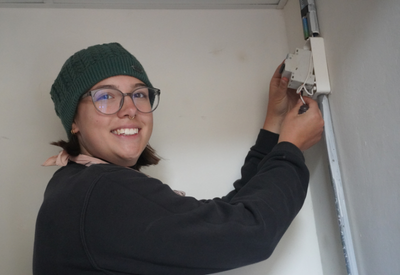
Students gained hands-on experience with wiring, system design, and troubleshooting, but also with cultural exchange. Community members shared their food, language, and traditions generously, even when resources were limited.
“Everyone shared everything they could, including shelter, culture, language, food. It made me feel grateful for where my money and effort were going,” said Sawyer.
Students lived communally by sleeping in tents, eating traditional meals like earth-oven potatoes, and spending evenings playing cards with faculty and peers. What began as a group of near-strangers quickly became a tight-knit community. Carter Church recalls, “We were all working together on a goal so we had to communicate and become a team with one another. Becoming close with the people you are working with provided a sense of community. By the end of the trip, it felt like I had known each and every one of them for a long time.”
Sawyer added, “living in the present moment with each other and not worrying about phones or TV led to a deeper connection than you can achieve in a classroom.”
The experience blurred the boundaries between students and faculty, creating relationships rooted in shared work, shared meals, and shared challenges.
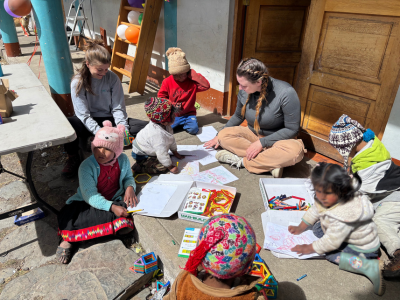
The project culminated in a joyful celebration where community members who had contributed financially and through labor as porters and guides, experienced the systems for the first time.
Families turned on electric lights, illuminating homes previously lit by kerosene lamps. Children read books. Parents worked into the evening without toxic fumes.
Jenna described the day as one of her favorite memories, “We shared amazing food, played soccer with the kids, and danced all afternoon. The speeches helped me grasp how much their lives were changed. I felt incredibly humbled and grateful.”
The goodbye was far harder than she expected. By the end of the journey, students returned with a deeper understanding of global inequity and the human meaning of sustainable technology. They learned that sustainability is not only about environmental preservation. It is about connection, safety, and the resilience of communities living in the world’s most remote regions.
The systems they installed will continue to support these communities long after the team’s departure. But the lessons learned like humility, gratitude, and human connection, will stay with them for life.
About the Department of Sustainable Technology and the Built Environment
One of seven departments housed in the College of Fine and Applied Arts, the Department of Sustainable Technology and the Built Environment at Appalachian State University features an integrated array of programs spanning the fields of sustainable design and technology. Its mission is to foster a strong and vibrant culture of inquiry, discovery and innovation that integrates theory with application, problem seeking with problem-solving, local issues with global perspectives and technological progress with environmental stewardship. It offers bachelor’s degrees in sustainable technology and building science, and a master’s degree in technology.
About the College of Fine and Applied Arts
Appalachian State University’s College of Fine and Applied Arts is a dynamic and innovative group of seven academic departments, bringing together a variety of perspectives, experiences, and real-world education to provide unique opportunities for student success. The college has more than 3,500 undergraduate and graduate majors. Its departments are Applied Design, Art, Communication, Military Science and Leadership, Sustainable Development, Sustainable Technology and the Built Environment, and Theatre and Dance.
About Appalachian State University
As a premier public institution, Appalachian State University prepares students to lead purposeful lives. App State is one of 17 campuses in the University of North Carolina System, with a national reputation for innovative teaching and opening access to a high-quality, cost-effective education for all.
STBE S26 Peru thumb
STBE S26 Peru thumb